
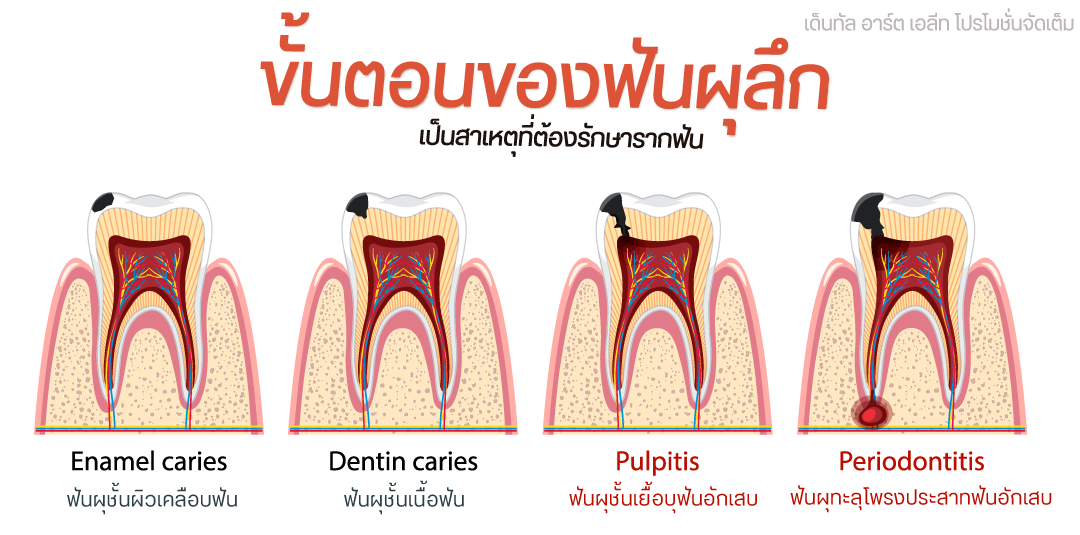
รากฟันอักเสบ หรือเนื้อเยื่อในฟันอักเสบมีสาเหตุจากการติดเชื้อแบคทีเรียที่มีต้นเหตุจากฟันผุ ฟันแตกหัก ฟันร้าว โรคปริทันต์ชนิดรุนแรง หรือการได้รับอุบัติเหตุที่ทำให้ฟันได้รับแรงกระแทกอย่างรุนแรง จนส่งผลให้รากฟันเกิดการติดเชื้อและเยื้อฟันอักเสบ หรือการตายของเนื้อเยื่อในฟันที่หากปล่อยทิ้งไว้เนิ่นนานจะยิ่งทำให้ฟันและเนื้อเยื่อโดยรอบเกิดความเสียหายจนขยายวงกว้างมากขึ้น ทำให้การรักษามีความยากซับซ้อน มีโอกาสรักษาให้หายได้น้อยลง
สาเหตุที่มีหนองบริเวณปลายราก
หนองที่ปลายรากฟัน เกิดจากเนื้อเยื่อในฟันอักเสบหรือติดเชื้อเป็นระยะเวลานานโดยไม่ได้รับการรักษา เกิดการสะสมจนลุกลามจากตัวฟันลงสู่รากฟัน ออกสู่เนื้อเยื่อรอบปลายรากฟันจนเกิดการทำลายเนื้อเยื่อและการละลายของกระดูกรอบรากฟัน เกิดเป็นถุงหนองดันเนื้อเยื่อเหงือกทำให้เหงือกบวม เป็นหนอง และมีอาการปวด ในกรณีรุนแรงอาจมีอาการเหงือกบวม ปวดมาก ใบหน้าบวม และอาจจะมีไข้ร่วม ถ้า X Ray ดู จะมองเห็นเงาสีดำที่ปลายรากฟันที่แสดงให้เห็นถึงหนองหรือการอักเสบของเนื้อเยื่อในฟัน

Frequently Asked Questions About Root Canal Treatment
Can I need root canal treatment even if my tooth does not hurt?
Yes. A tooth with damaged, dead, or infected pulp may not always cause noticeable pain. Changes around the root may sometimes be detected during a dental examination or on an X-ray. The absence of pain does not necessarily mean that the tooth is healthy.
How long does a root canal-treated tooth last?
A properly treated and restored tooth can remain functional for many years. Longevity varies depending on the condition of the tooth, quality of the final restoration, biting forces, gum health, oral hygiene, and regular dental follow-up.
Root canal treatment or tooth extraction: which is better?
The appropriate treatment depends on the condition of the tooth. If the tooth can still be successfully treated and restored, root canal treatment may allow the natural tooth to be preserved. If the tooth is severely damaged and cannot be restored, extraction may be considered. A clinical examination and X-ray are recommended before deciding.
Do I need a dental post after root canal treatment?
Not every root canal-treated tooth requires a dental post. Your dentist will assess the remaining tooth structure and the type of restoration required. A post may be used to help retain the core restoration when there is insufficient tooth structure remaining.
Do I need a crown after root canal treatment?
Not every root canal-treated tooth requires a crown. The appropriate restoration depends on the tooth location, the amount of remaining tooth structure, existing cracks, and biting forces. If significant tooth structure has been lost, a dental crown may be recommended to help reduce the risk of fracture.
Why does my tooth still hurt after root canal treatment?
Some tenderness or discomfort may occur during the first few days after treatment. If the pain becomes more severe, swelling develops, or your symptoms do not improve, you should return to your dentist for further evaluation.
How long does root canal treatment take?
Treatment time varies from case to case depending on the number and complexity of the root canals and the extent of infection. Your dentist will examine the tooth and take an X-ray to determine an appropriate treatment plan.
How many visits does root canal treatment take?
The number of visits depends on the tooth, number of root canals, severity of inflammation or infection, and how the tooth responds to treatment. Some cases may require more than one cleaning and medication appointment before the root canals can be permanently filled.
How much does root canal treatment cost?
Root canal treatment at Dental Art Elite ranges from 6,000–15,000 THB per tooth, depending on the tooth location, number of root canals, and complexity of treatment. Treatment starts from 6,000 THB for anterior teeth, 8,000 THB for premolars, and 10,000–15,000 THB for molars.
Does root canal treatment hurt?
Local anesthesia is used during root canal treatment to help minimize discomfort. Some tenderness or soreness may occur temporarily after treatment. The level of discomfort can vary depending on the condition of the tooth and the severity of inflammation or infection.
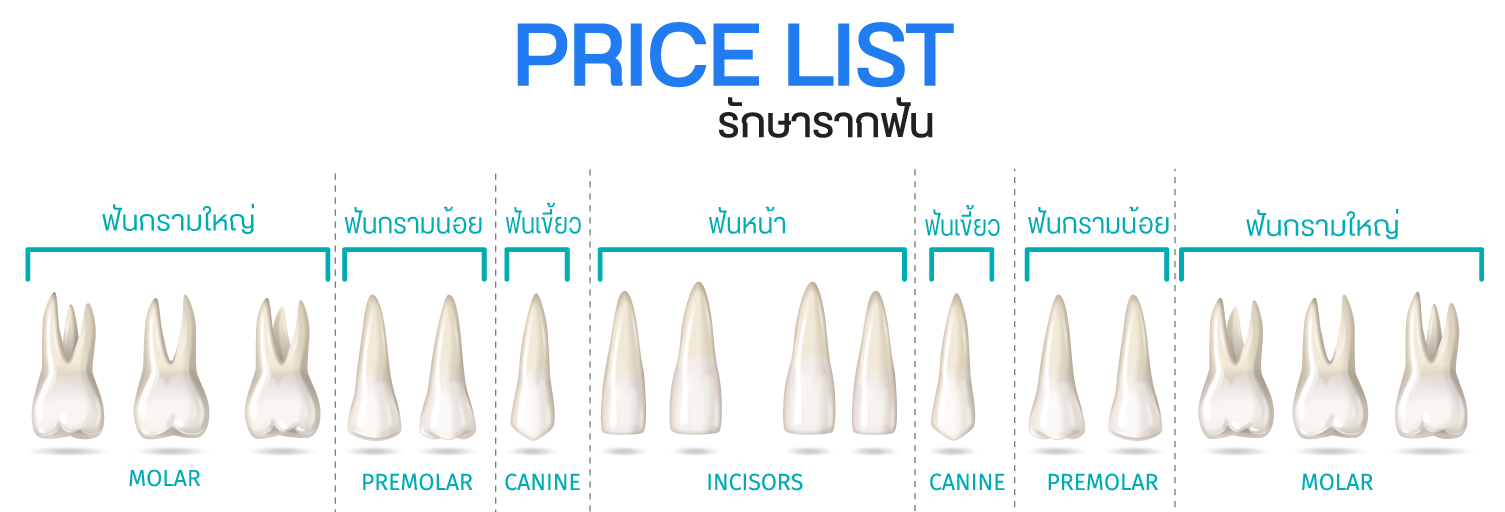
(ค่าบริการรักษารากฟัน ไม่รวมค่าใช้จ่ายประกอบอื่น ๆ เช่น ค่า X Ray ค่ายา ค่า Str.)


25 Aug 2026
Dental Art Elite receives the 2023 Bronze Award from Dentsply Sirona (Thailand), a proud milestone in our commitment to Digital Dentistry.

25 Feb 2024
Dental Art Elite continues to advance its dental implant care through ongoing education and the latest developments in implant dentistry. Dr. Yawee Mekkam (Dr. Far) attended the launch of PrimeTaper EV, a dental implant system by Dentsply Sirona, and an educational session covering implant microdesign, macrodesign, and the evolution of the EV implant system.